As seen on social
Chinese smart collar in the spotlight
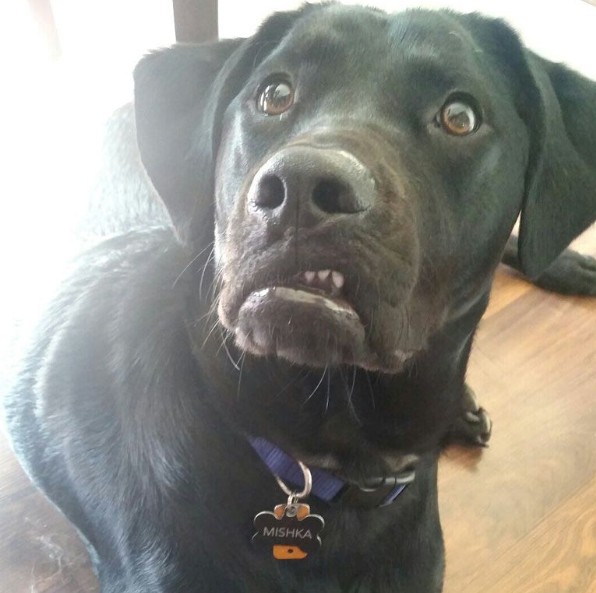
You gotta be serious !
The $119 Dog Translator That Broke the Internet — And How the Hype Was Manufactured

It started with a video. A golden retriever barks. A phone screen flickers. The words "I WANT TO PLAY" appear in cheerful capitals. The internet erupted. Within days, PettiChat — a $119 AI collar claiming to translate your pet's sounds into human language — had collected tens of thousands of pre-orders and was sitting at 770% of its Kickstarter funding goal.
I watched that video. Then I started pulling threads. What I found was not a scientific breakthrough. It was a masterclass in how to manufacture viral hype, dress up paid advertising as journalism, and collect pre-orders for a promise that has been made — and broken — at least three times before.
Let me show you everything I found.
Chapter 1: The Press Release That Became "News"
On April 14, 2026, a press release hit the wire. The headline read: "PettiChat Launches World's First Real-Time Pet Translator on Kickstarter: Start a Real Conversation with Your Pet." Within hours, it appeared across dozens of major platforms — Yahoo Finance, Morningstar, The Manila Times, Sina Hong Kong, and many more.
Most people seeing those logos assume this is journalism. A reporter investigated this product. An editor reviewed it. A publication vouched for it. That is not what happened.
How a Paid Press Release Becomes "Coverage"
This is the PR wire playbook. It is used by thousands of companies every day. Here is exactly how it works:
The company contact for a device asking you to trust it with an always-on microphone in your home is a Gmail address and a Chinese mobile number. That is not a legal department. That is not a data privacy officer. That is a marketing inbox.
Chapter 2: The "Review Sites" That Are Not Review Sites
After the press release ran, comparison and review content started appearing. One piece in particular caught my eye: an article titled "AI Pet Translator Showdown: PettiChat vs Bowlingual vs MeowTalk — Which Is Worth Buying?" published on a site called BackerRock.
BackerRock describes itself as a site covering Kickstarter and crowdfunding products. Its business model is built around driving traffic to crowdfunding campaigns — the kind of site that profits when readers back a campaign through their links.
The PettiChat "showdown" article compared the product against its older, discredited competitors in a way that made PettiChat look like the obvious winner. It did not disclose any relationship with PettiChat. It did not question the 94.6% accuracy claim. It presented unverified marketing copy as independent analysis.
This pattern — paid wire release picked up automatically + promotional "review" content from campaign-affiliated sites — is a standard Kickstarter launch playbook. It creates the illusion of widespread independent validation where none exists.
To their credit, two outlets did push back with genuine scepticism. The Underbite wrote a careful analysis noting that "nobody has cracked this yet" and that the accuracy claim "comes without published methodology or independent validation." GadGet asked directly whether the science holds up. They are the minority.
Chapter 3: The Graveyard — Because This Has All Happened Before
Here is what the PettiChat launch coverage did not mention: this exact product has been launched, funded, celebrated, and quietly buried at least three times in the last 25 years. Every time, the same promises. Every time, the same outcome.
The Pet Translator Graveyard
Every headstone below was once a viral product with a heartwarming demo video and a confident accuracy claim.
Named Time Magazine's Best Invention of 2002. Sold in Japan, South Korea, and the United States. It claimed to analyse dog barks and translate them into emotional categories.
The manufacturer eventually labelled outputs as "for entertainment purposes only." Veterinarian and animal behaviourist Dr. Sophia Yin, who studied it directly, said it was "not very useful because the translations aren't trustworthy and most don't make sense." Wind caused false readouts. Dog tags caused interference. Other electrical equipment triggered false positives.
It did not translate anything. It made guesses from a list of preset phrases and hoped for the best.
VERDICT: Entertainment toy. Not a translator.Used EEG brainwave-reading technology to allegedly detect dog thoughts and speak them aloud through a speaker. Raised significant crowdfunding attention. Popular Science and multiple university neuroscience departments called it "bogus."
The Indiegogo page quietly admitted backers were only "supporting research" — not funding a finished product. The device remained in prototype stage and was never meaningfully shipped to backers. The website still exists. The product does not.
VERDICT: Vaporware. Never shipped. Still in "prototype v3.2".Created by a former Amazon Alexa engineer with genuine AI credentials. Cited a 90% accuracy figure from a 2021 study under controlled lab conditions. Generated enormous press coverage and goodwill.
What it actually does: classifies cat sounds into one of 11 fixed preset intent states. It does not generate language. It does not produce context-specific responses. Every single "translation" maps to one of 11 predetermined outputs. User reviews consistently note that translations rarely match actual behaviour.
VERDICT: Mood classifier dressed as translator. 11 preset outputs.Claims 94.6% real-time translation accuracy. Claims 1.2-second response time. Claims two-way translation — human speech converted into sounds pets recognise. Claims a dataset of 1 million+ vocal and behavioural samples.
Zero published methodology behind the accuracy figure. Zero independent scientific validation. Zero peer-reviewed research linked. The two-way translation claim — converting your speech into signals that pets understand — is a dramatically harder problem that no research institution has come close to solving. The Q4 2026 shipping timeline for custom hardware with cloud infrastructure is, charitably, optimistic.
PettiChat is made by Traini, a company that also makes Sentra — an AI dog health collar that genuinely placed #1 at CES 2026's AI Hardware category. Traini is a real company with real funding ($7.5 million raised). That does not mean PettiChat's translation claims are real.
VERDICT: Verdict pending shipment. History does not inspire confidence.Chapter 4: The Science — What AI Can Actually Do
Let us be precise, because the nuance matters.
Animals do not have language in the human sense. A dog's bark does not contain words or sentences. It contains acoustic patterns that correlate with emotional and arousal states. High-pitched, short, repetitive barks correlate with excitement. Low, sustained growls correlate with threat or anxiety. The bark does not mean "I want to play." The bark is produced by an animal in a state that often precedes play. These are different things.
Acoustic analysis alone predicts pet behavioural intent with approximately 57.3% accuracy — barely better than a coin flip — according to peer-reviewed studies. Combining audio with video and body-language data pushes this toward 89% under controlled lab conditions. Real-world environments with background noise, unfamiliar contexts, and individual animal variation perform significantly worse.
PettiChat claims 94.6% accuracy. With audio only. On a collar. No published study. No methodology. No independent verification. No baseline comparison explained.
The two-way translation direction — converting human speech into sounds pets respond to — has no credible research base at all. It would require AI to both decode pet communication and predict which acoustic outputs reliably trigger desired behavioural responses across different animals, breeds, ages, and contexts. That problem is not being solved in 2026.
Chapter 4b: Let's Read the Marketing Slide Out Loud
PettiChat's promotional materials include a four-panel graphic that has been circulating widely on social media. It is the kind of thing that looks authoritative at a glance — black background, clean bold type, purple numbers, scientific-looking globe imagery. Let us read it the way a scientist would, rather than the way a person scrolling Instagram at 11pm would.
PANEL 1 — "STUDIES REVEAL CATS & DOGS USE VOCALS FOR PURPOSES"
Read that sentence again. Slowly.
"Use vocals for purposes."
Yes. Animals make sounds. For reasons. This is the scientific insight PettiChat opens with. Rocks roll downhill for purposes. Fish swim for purposes. My kettle boils for purposes. This statement — which is apparently the foundational research premise for a $119 device — says nothing. It is so vague it cannot be wrong. A first-year copywriter wrote "studies show animals communicate vocally" and someone in marketing said "tighten it up."
The word "studies" appears without a single citation. Which studies? Who conducted them? When? Published where? These questions answer themselves: there is no citation because there is no specific study being referenced. "Studies" here is rhetorical decoration, not evidence.
PANEL 2 — "MILLIONS OF PET DATA IS COLLECTED FOR AI LEARING"
Two problems. One is embarrassing. One is substantive.
The embarrassing one: this panel contains a typo. The word is LEARNING. The panel says LEARING. This is the marketing material for a product claiming to deploy cutting-edge neural AI. It cannot spell "learning." This got past every proofreader, every designer, every approver, and was published globally.
The substantive one: "millions of pet data" is not a scientific statement. It is a number with no unit, no methodology, and no context. Millions of what, exactly? Recordings? Hours? Individual vocalisation events? Labelled samples? Unlabelled samples? Collected how? Under what conditions? By whom? Validated against what ground truth? "Millions of pet data" is to AI research what "many chemicals mixed together" is to chemistry. It gestures at science without performing any.
PANEL 3 — "94.6% ACCURACY IS GUARANTEED BY PEER-REVIEWED RESEARCH"
This is the most important panel. And it contains what I believe is a direct misrepresentation.
I have searched. I have searched thoroughly. There is no peer-reviewed research that validates PettiChat's 94.6% accuracy claim. None. Not a preprint. Not a conference paper. Not an academic poster. Nothing from Traini, nothing from a partner institution, nothing citing PettiChat's dataset or methodology. The claim floated in a press release — written by the company — and has since been treated as fact by every outlet that reproduced it without checking.
The actual peer-reviewed research on acoustic-only animal vocalisation classification tells a very different story. As documented in Chapter 4: ~57.3% accuracy on audio alone. ~89% under controlled lab conditions with audio AND video combined. Real-world performance lower than both. That is the published science.
Now look at the word choice in this panel: "GUARANTEED." Not "measured." Not "achieved in testing." Not "claimed." Guaranteed. By peer-reviewed research that does not appear to exist. That word choice is not accidental. Guarantee implies commitment, accountability, verifiability. It is designed to close the doubt that the previous panels might leave open.
PANEL 4 — "AI MODEL IS INTEGRATED IN DEVICE FOR RESPONSE WITHIN 1.0 SECOND"
This one is more subtle. It is almost certainly true — and almost certainly irrelevant.
Getting a collar to produce an output within one second is a latency specification. It tells you the system is fast. It tells you nothing about whether the output is accurate, meaningful, or in any way a translation rather than a guess from a preset list. MeowTalk — which maps cat sounds to 11 fixed outputs — responds within one second too. Bowlingual responded within one second. Speed is not the problem these devices had. Correctness was.
Framing response latency as a technical achievement — complete with scientific globe imagery and 1.0-second typography rendered like a headline statistic — is a classic misdirection. It fills a panel with something measurable and impressive-sounding, so your eye moves on before you notice that Panel 3 has no source and Panel 2 has a typo.
One second. Yes. But one second of what, exactly?
Four panels. One vague truism with no citation. One grandiose dataset claim with a typo in the word "learning." One accuracy guarantee citing research that does not appear to exist. One latency spec dressed up as scientific validation. This is what passes for evidence in the pet tech space in 2026 — and it is working, because 770% of a Kickstarter goal has already been raised by people who saw this graphic and nodded along.
Chapter 5: The Microphone in Your Living Room
This is the part I want you to sit with.
PettiChat is a device that records audio continuously in your home and sends that audio to servers run by a company whose data infrastructure you know nothing about. The company is based in Hong Kong and Mainland China. Their privacy policy is a Shopify template. Their data protection contact is a Gmail address.
What You Are Agreeing To
Before purchasing any always-on home audio device, you should be able to answer these questions. With PettiChat, you cannot:
- WHERE are your audio recordings stored? Which country? Which servers?
- WHO has access to the raw audio data from inside your home?
- HOW LONG is audio data retained? Is there a deletion policy?
- IS the device GDPR compliant for European buyers?
- HAS the device been FCC certified for US buyers?
- WHAT third parties, if any, receive your data?
- WHAT happens to your data if the company shuts down or is acquired?
- HAS any independent security firm audited the data pipeline?
PettiChat's published documentation answers none of these questions adequately. You are being asked to trust a device with continuous microphone access to your home, your family, and your children's voices — on the basis of a Gmail contact and a viral video.


But Here Is What Nobody Is Saying
You already speak the language.
You knew before they finished their third circle around the water bowl that they were about to ask for a refill. You felt the shift in the room — some angle of the ears, some particular quality of the silence — and you knew. You have been receiving these signals, reading this language, for years. You built a translation engine no algorithm can replicate, because yours runs on something that cannot be trained into a model:
Paying attention. Every single day. Because you love them.
The moment your pet truly needs you to understand something that matters — pain, distress, fear — you will know. Not because of a collar. Because you always have.
Save your $119. Buy them something they'll love. Or give it to a shelter animal who hasn't found their person yet.
The Bottom Line
PettiChat may ship. It may work better than its predecessors. Traini is a real company with real funding and a real track record — their Sentra collar genuinely impressed at CES 2026. I am not saying the product is fraudulent. I am saying the claims are unverified, the accuracy figure is unsupported, the privacy questions are unanswered, and the product category has a perfect record of delivering far less than promised.
You deserve to know that before you hand over $119 and put a microphone in your home.
That is what I am here for.

// WHO IS PHANTOM
By day, I am a renowned journalist on the AI and technology beat at one of the world's top publications — bylines you have almost certainly read, on stories that have moved markets and made companies very uncomfortable. By night, I am Phantom.
I work in the shadows under a pseudonym because that is the only way to stay genuinely independent. No editor pressuring me to soften a finding because the company in question is a future advertiser. No PR team holding access hostage. No conference invite to lose. No exclusive to protect. Just the work, the evidence, and the readers it is written for.
I have no investors, no sponsors, no affiliate links, and no relationship with any company I cover here. I take no money from the subjects of my investigations. The only people I answer to are you — and the truth on the record. You can call me Phantom. The only agenda is the one you are reading.
See something amiss in tech or AI — or want to whistleblow anonymously? Tag @phantomsback on X, or slide into the DMs. Your identity stays yours. The story belongs to the readers.







This article represents independent research and personal opinion. All factual claims are sourced and linked. PettiChat and Traini are registered brands with no affiliation to this publication. Nothing in this article constitutes legal, financial, or purchasing advice.